Radars | National Meteorological Service of Belize
The National Meteorological Service presently provides forecast products for the general public along with those for maritime and aviation interests.
At a glance
About this Belize website
The National Meteorological Service presently provides forecast products for the general public along with those for maritime and aviation interests.
- Publisher
- nms.gov.bz
- First discovered
- 13 September 2026
- Last checked
- 14 September 2026
Information found on this page
Highlights and services
What is a Radar?
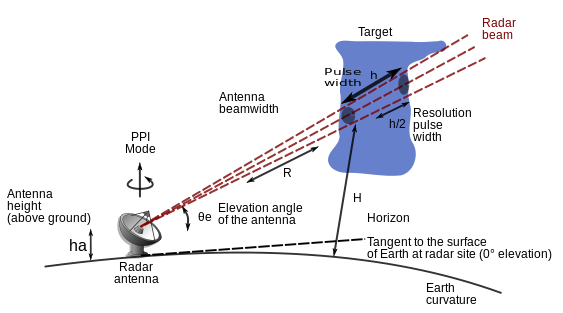
RADAR stands for RAdio Detection And Ranging and was slowly developed over time starting way back in the late 1800s. By the start of World War II, many countries used radars to detect enemy ships and aircrafts. When radar operators discovered that precipitation(e.g. rainfall) caused 'false' echoes on their screen (masking potential enemy targets) they realized the new found potential of radar. Soon after the war surplus radars were used as precipitation detectors. Since this time, the modern weather radar has evolved and improved a great deal, incorporating better data retrieval methods and higher resolution data. In fact, most modern weather radars are now pulse-Doppler radars, and are capa
The Doppler Effect
By utilizing the Doppler Effect, Doppler radars provide information regarding the movement and positions of targets. After the radar emits a pulse of radio waves, it tracks the phase shift between the transmitted radio wave and the received echo. This phase shift shows whether the target is moving directly toward or away from the radar, called its radial velocity. A positive phase shift implies motion toward the radar and a negative shift suggests motion away from the radar. The phase shift effect is similar to the "Doppler shift" observed with sound waves. If an object emits sound waves as it approaches a location, the waves are compressed leading to a higher frequency. As the object moves